A drawing is the start of the evidence
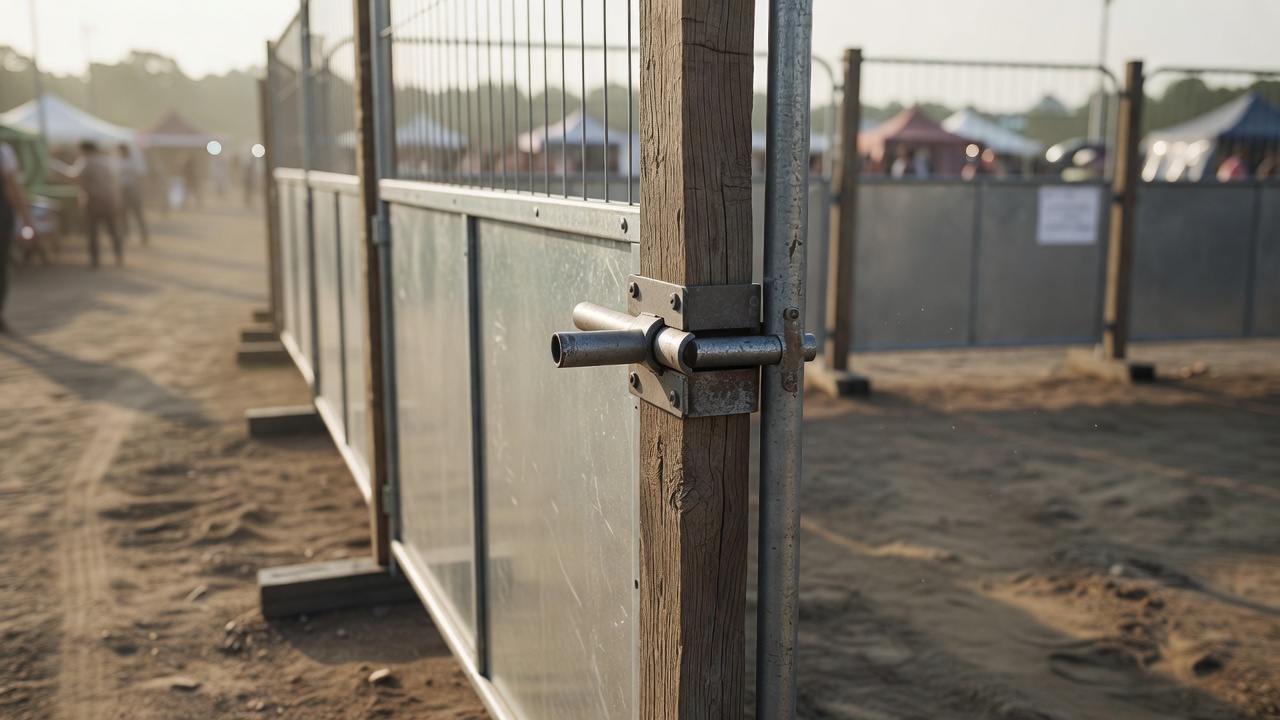
A festival site plan is an essential reference, but it is not a complete description of the environment people will experience. A line may represent a fence, a temporary barrier or an edge people can cross. A nominal opening may be narrower in use because of gate leaves, search positions, cables or furniture. The first task is to identify which features have been checked on the ground and which remain design intentions.
Maintain an input ledger alongside the drawing. For each consequential feature, record the source, observation date, units, responsible person and applicable layout version. Distinguish a surveyed dimension from an estimate taken from an aerial image. Where a measurement is uncertain, preserve a defensible range and explain why it is uncertain instead of silently selecting a convenient value.
The same location may have several valid configurations. A service access point can be open during build, controlled during admissions and unavailable during a performance. Link inputs to operating phases so that a model does not combine an early site drawing with a later gate arrangement. A consistent coordinate system and clear revision history help prevent that mismatch.
Describe usable routes, not just route lines
Route evidence needs to include surfaces, gradients, lighting, turning points and receiving spaces. Mud, standing water or a poorly lit transition may change how people use a path without altering its drawn width. Record locations where people hesitate, reverse direction or choose an informal shortcut. These observations can be more informative than an assumed uniform walking behaviour.
Accessible movement must be part of the main site picture. Review step-free continuity, viewing-area connections, accessible toilets, rest opportunities and pickup arrangements with competent accessibility input. Do not treat disabled attendees as one interchangeable category or assume they all follow a separate route. A model that lacks these differences should state that limitation explicitly.
Include the interfaces beyond the organiser’s direct boundary. A station exit, bus release point, taxi queue or nearby road crossing can alter arrival timing and available holding space. Agree which organisation owns each interface and how changes will be communicated. A planning boundary is not necessarily the boundary of the crowd-management problem.
Use observation without collecting everything
Manual counts, gate transaction totals and timed observations may answer an early planning question without identifiable video. Start by stating the question: for example, whether arrivals cluster after a transport release or whether a queue extends into a crossing. Then choose the least intrusive evidence capable of addressing it. More data does not automatically produce a more representative account.
If camera analytics or device-derived estimates are considered, examine coverage, missed observations, duplicate detections and the effect of weather or occlusion. Confirm the lawful basis, retention arrangements and any required data protection impact assessment before processing personal data. The European Data Protection Board’s video guidance and the Polish Personal Data Protection Office, UODO, are relevant starting points, not substitutes for legal advice.
Separate observed patterns from explanations. A count may show fewer people using a route, but it does not establish whether the cause was poor signage, a surface problem or an attractive alternative. Preserve those competing explanations until further observation or a controlled operational review resolves them.
Manual input-readiness checklist
Use these prompts to prepare a review conversation. Ticking every item records your judgement about coverage; it does not verify the evidence or establish that an event is safe. The checklist stays on this page and is not submitted or saved.
Hand over an auditable input pack
A useful pack combines the current drawing, the input ledger, photographs with context, count methods and an unresolved-issues list. Keep original observations separate from cleaned or transformed data. If software converts a drawing into a movement network, inspect that conversion: a connected line in a file does not guarantee a traversable path on site.
Ask the modeller to identify which assumptions matter most to the result before spending effort refining minor details. Return any newly discovered dependency to the ledger. This creates a two-way process: evidence informs the model, and model sensitivity identifies where better evidence may be needed.
For broader reading, consult the UK Health and Safety Executive’s event safety guidance, the Purple Guide and European Data Protection Board resources. Apply relevant Polish requirements and local authority conditions to the actual event; overseas guidance does not replace them.